Marine Debris
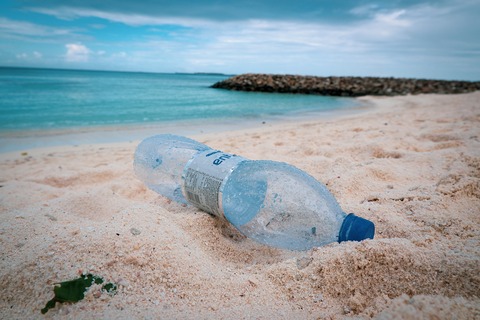
What is the estimate of garbage that exists?
Recent estimates put the amount of plastic floating in the world’s oceans at more than 5.25 trillion pieces weighing more than 268,000 metric tons. That translates to as much as 100,000 pieces per square kilometer in some areas of the ocean. This is a new ocean habitat know as the plastisphere. A report from the World Economic Forum earlier this year estimates that the weight of plastic in the ocean will equal the weigh of fish by 2050. According to the report the worldwide use of plastic has increased 20-fold in the past 50 years and is expected to double again in the next 20 years.
What are the main garbage piles?
The concentration of this material is housed in five plastic islands discovered in the oceans, two in the Pacific, two in the Atlantic and one in the Indian Ocean.

High concentrations of plastics can also be found along coasts and coastlines, especially in regions with high coastal populations, inadequate waste management systems, intensive fisheries, or high tourism.
Why is it important to know salinity, buoyancy and density of our ocean?
Main reason is because they will help us to determine important characteristics of the state of the plastics, since salinity is one of the factors that fragments them. By knowing the amount of this three key factors, we'll have better calculations and approximations.
Buoyancy of plastic waste
Buoyancy depends on the density of the material and the presence of trapped air. After some time in the ocean, floating plastic debris can become sufficiently contaminated with biological growth that the density becomes greater than seawater and sinks.
Density of the sea: ocean water is 1,027 kg/m3.
Density of plastic: The density of plastic is quite variable, as there are a multitude of different types of plastic; generally, plastics have a density of 0.5 to 4.0 g /cm^3 . At the low end, there are plastics such as Polypropylene Uniboard Standard, which has a density of 0.65 g /cm^3 . At the high end, there are plastics such as TFE Tetron B, which has a density of 3.9 g /cm^3 .
How do you prevent the plastic from being eroded by water?
UV radiation from sunlight is the main agent that degrades plastic. The action of waves accelerates this process and as a result the larger fragments break into smaller pieces, generating microplastics. It is difficult to estimate the time it takes for plastic to biodegrade in the oceans. Once plastic is buried, enters the water column or is covered by organic or inorganic matter (which is very common in the marine environment), it is less exposed to sunlight, and temperatures and oxygen decrease, which delays its degradation.
What does the integration of Computer Vision in marine debris mean?
Computer Vision is a game changer. It allows to have more eyes in the sea than before! If we have a way to scan more sea and estimate automaticly, the answers to what we need to know will be with less hands and time involved.
What can be used to monitor above and below water debris?
To monitor on the sea, we can use Computer Vision models connected with satellite images! And if we want to monitor under the sea, for all the plastic flakes laying around the corals, we use a device capable to swim/walk around with the model loaded up in it.